
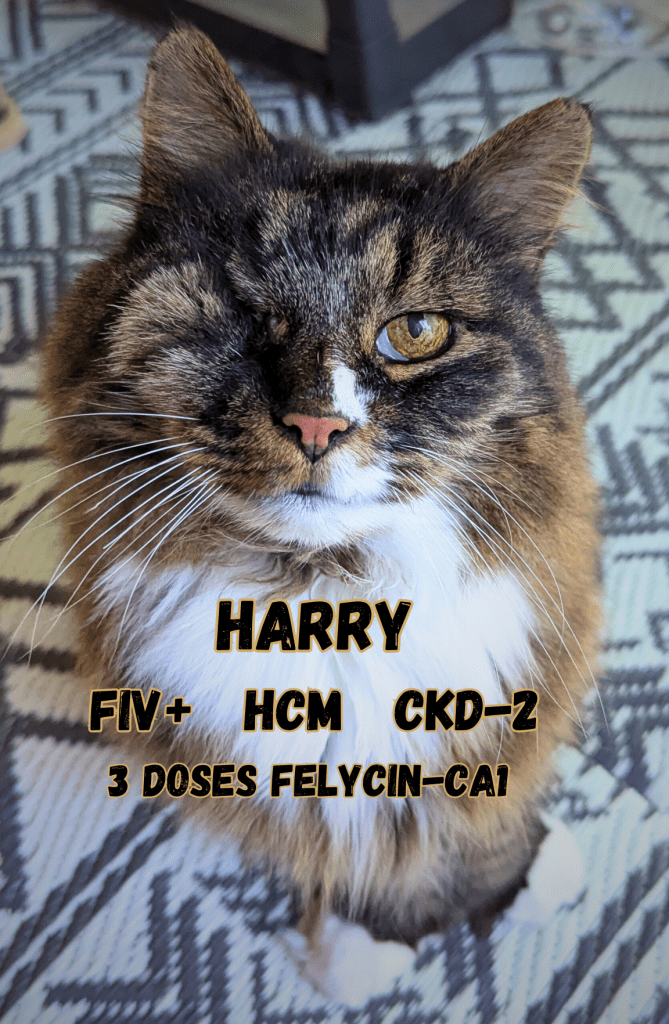
I mentioned earlier this year that Harry persevered through some serious struggles. I’m so happy to say that he cleared his Cryptococcus infection in 5 months, gained half a pound, and his CKD has been relatively stable through it all! I spoke to his cardiologist in May and we decided we would start the compounded version of Sirolimus HPMC capsules available through Wedgewood Pharmacy while waiting for Felycin-CA1 to be released. Felycin was available for purchase beginning in August 2025.
That brings us to now! Felycin-CA1 has entered the chat, y’all!
This week, Harry had an acupuncture appointment, and since we started Felycin 3 weeks prior, I wanted to do a quick blood check just to make sure his glucose and liver values were okay. Felycin is contraindicated for cats with diabetes and it is metabolized through the liver, so it’s important to monitor. Not only were they okay, but his KIDNEY values were outstanding, and I’m still riding that high days later!!! SDMA (symmetric dimethylarginine) is a specific blood marker that can be used to measure kidney function. I personally feel it’s the most sensitive measure, although creatinine, BUN, and phosphorus are important too. A normal SDMA is between 0-14. Harry has not been below 12 since at least 2022 (could be earlier), and he’s been averaging between 12-16 the last few months, but this week…this week IT WAS 8!!! A SINGLE DIGIT! I’m ecstatic about that. I have tried to get it in my mind that the most important diagnostic is the cat physically right in front of me, and that numbers are just additional data, but it’s hard NOT to be thrilled when you see such a drastic improvement when he’s already come so far!!! I’m so happy about it, and really the only significant change is starting Felycin, and he’s only had 3 weekly doses!

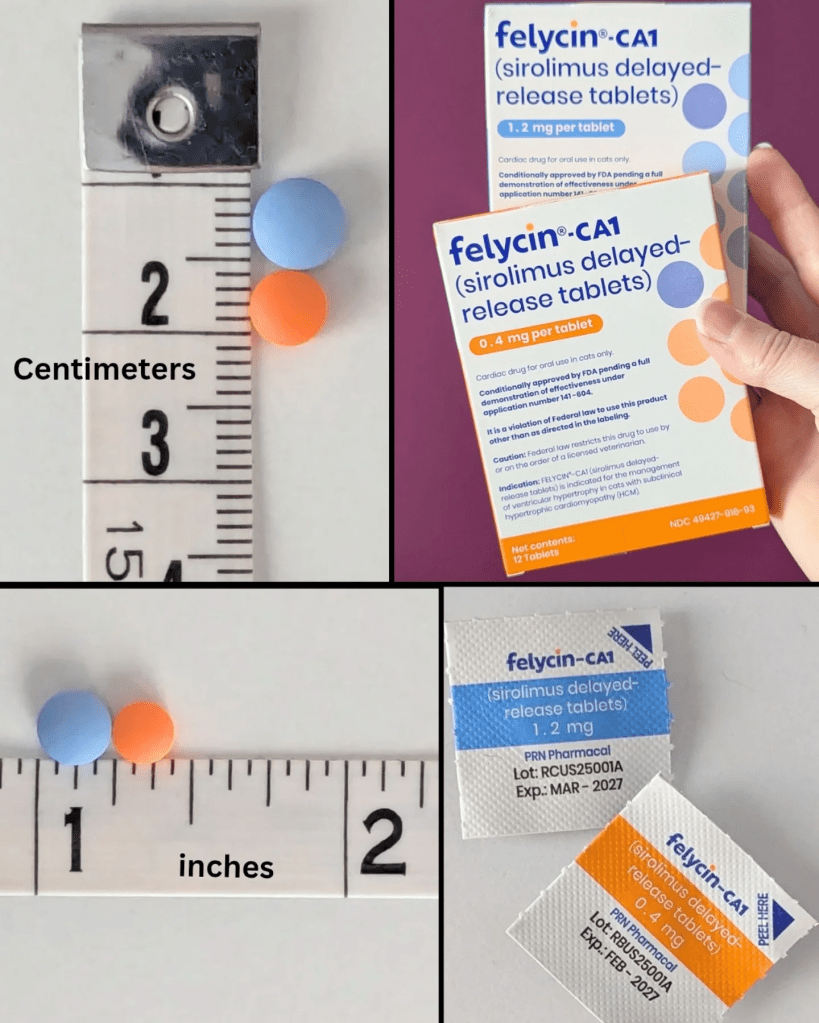
Felycin is a specific formulation of Sirolimus (more commonly known as Rapamycin) made for cats for the specific purpose of treating Hypertrophic Cardiomyopathy (HCM). Felycin is also the specific formulation that was used in clinical trials for HCM cats so I’m thrilled to be able to have it in hand. We have a recheck echocardiogram scheduled in December and I’m hopeful that it’s making a positive difference for the mild thickening noted in March for Harry’s left ventricle. He did not have atrial dilation and I’m very grateful for that.
There are three strengths of Felycin available and based on his weight, Harry needs two of them to make his 0.3mg.kg dose. The pills are tiny which is amazing! My image shows the 1.2mg and 0.4mg pills. At once a week, they are a breeze to give Harry.
Having Felycin available for HCM treatment is wonderful all by itself, but there has also been anecdotal evidence of Felycin being beneficial for CKD cats (which is a BIG reason why this is such a huge deal for us this week). There are studies taking place right now to assess if Felycin could also help CKD cats too. I would never want a diagnosis of HCM or CKD for any of my cats or any cats at all, and typically treatment of one exacerbates the other, so if Felycin can make a positive impact on both…that is a monumental advancement in the making. The fact that Harry was diagnosed with mild HCM, but so early that it didn’t warrant starting any typical meds, feels like the universe giving us a break. Living in this timeline where Felycin was on the horizon and there were generics available in the meantime… man, I’m so grateful.
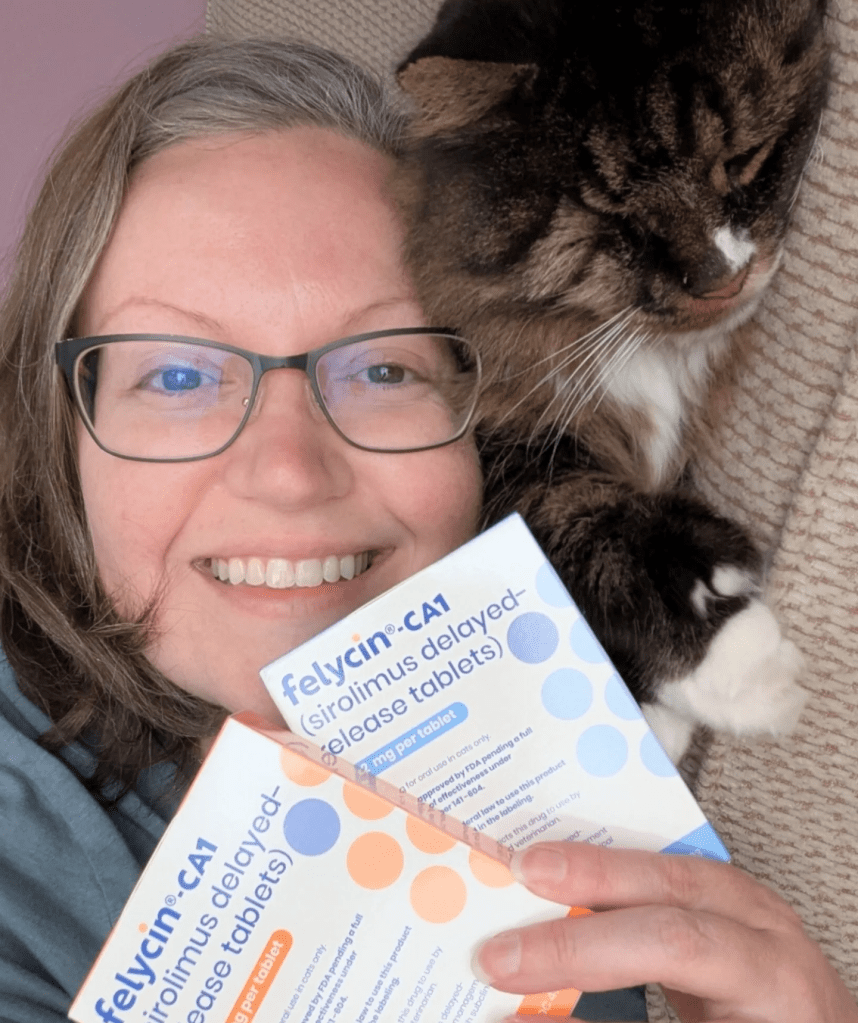
I also have not found a single other FIV+ cat walking a similar journey as us with HCM and CKD while trying Felycin, so I’m posting on all my socials and here to hopefully give the next cat parent someone to find. Rapamycin is technically an immunosuppressant drug (although immunosuppression has not been seen in the low doses Felycin is prescribed at) and the thought of giving an immunosuppressant drug to an FIV cat felt a little scary at first. I’m so proud of my boy and proud of the advancements giving us a path to follow now.
 Caffeinated Low Tox Cat Mom